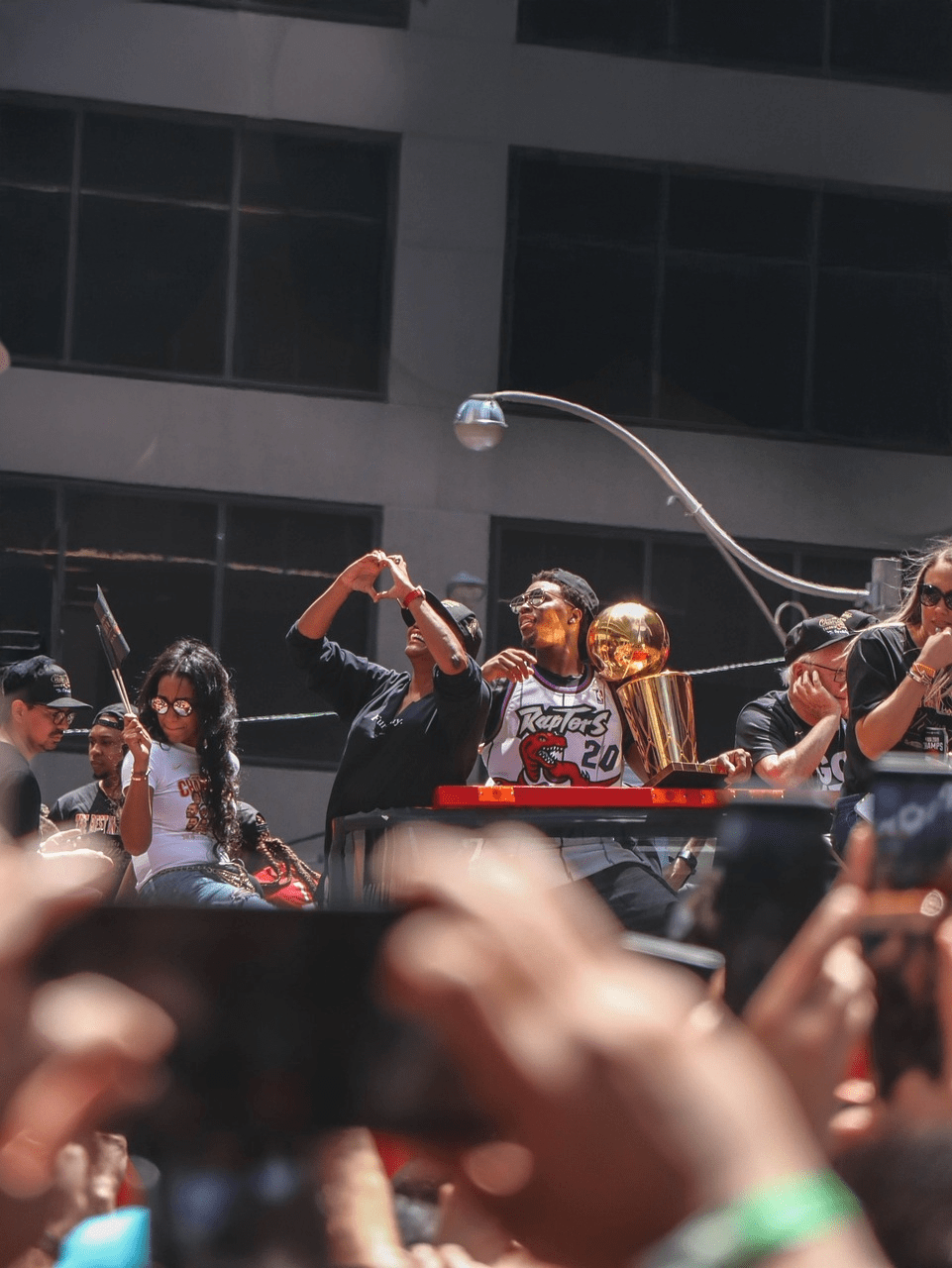
With the roster looking complete, let’s take a look at how the raptors project to perform in the 2025/26 season
Written by cash_hoops_
introduction and editing by gregory spicer
08/05/2025
Following six seasons of regression since their incredible 2019 playoff run, the Toronto Raptors are looking to reassert themselves as contenders. With over 157 million dollars invested in their starting lineup, the time to win has arrived. (Total salary cap investment in the starting lineup is 106% BUT still is NOT over the luxury tax line. This is why they still had room to build their bench.)
The NBA does have a salary cap, however, so the Raptors’ game plan has to include more than just buying another ring. Despite using much of their cap room on starters, they have utilized rookie contracts and affordable talent to rebuild a bench that was one of the worst in the NBA last season. (Graph details percent of salary cap used by each starting player contract)
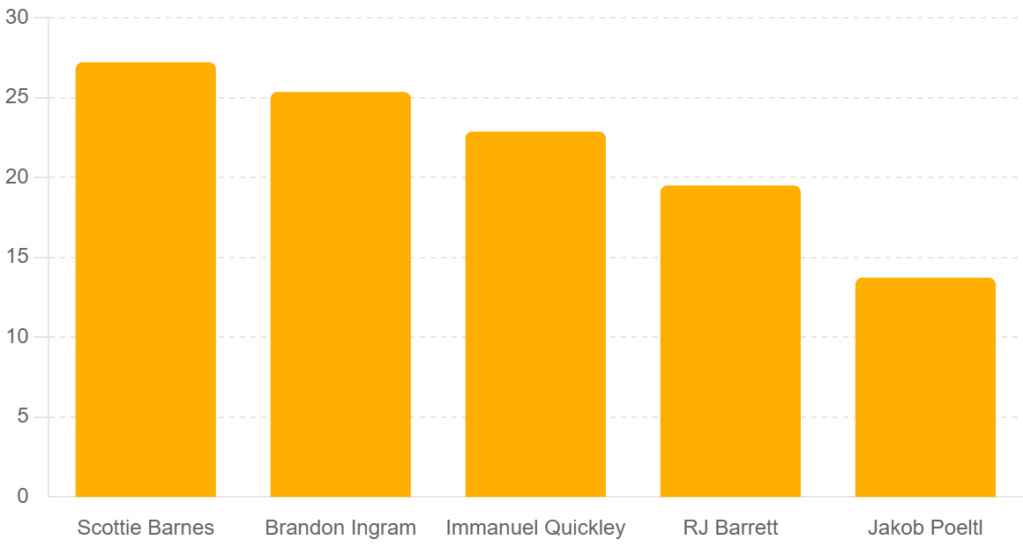
Looking at the roster breakdown, they project to have one of the most well-rounded starting fives in the league and a sneaky good second unit led by 14 PPG scorer Grady Dick.
With that, here is @cash_hoops_’s expert breakdown of the Toronto Raptors’ projected defense.
Creating space has become as easy as ever for NBA offenses, but the question for defenses is, how exactly can they take that space away? The Raptors were early practitioners in loading up on lengthy, high-IQ, athletic, and versatile defensive players. If the players didn’t have length (e.g., Kyle Lowry or Fred VanVleet), they were still high-IQ with the ability to switch. Those traits have since become a staple around the NBA to counter the new pace and space offensive strategy. Defenses as a whole are becoming more switch-heavy, but to do this, they need a roster with length and athleticism.
The Raptors were able to find success with this type of roster in 2019/20. They played more games than any other team and still had the best defensive rating throughout the 2019 and 202 playoffs. By loading up their squad not just with on-ball versatility, but also elite-level disruption, turnover generation, communication, help defense, rotating, rim protection, coaching schemes, and of course, effort, they had all the traits needed for a championship run.
Since then, however, the Raptors spent the better part of the 2020s in no man’s land. They haven’t been good enough to compete for a championship, but never tanked to a top draft pick. After letting go of key assets from their championship roster (Fred VanVleet, OG Anunoby, and Pascal Siakam), the retooling had begun.
Six seasons later, and Toronto is attempting to regain the defensive identity that made them a powerhouse a half-decade ago. Although injuries, the league’s toughest schedule, and some blatant tanking caused them to finish the first half of 2024/25 at 10-31, they ended with a respectable 20-21 finish. The key to their turnaround was an impressive 2nd-ranked defense post All-Star break.

This trend continued in Summer League, where Toronto held its opponents to 40.9% from the field and 31.8% from three. Even more notably, they ranked first in Summer League steals at 14.2 per game, including a record-breaking 33 forced turnovers in their 116-72 victory vs the Chicago Bulls. That was the first of four consecutive victories, leading to a Summer League Playoff qualification.
During their five games in Las Vegas, we saw similar defensive glimpses to those 2019 and 2020 teams. With the intense ball pressure, off-ball activity, and disruption from the backcourt, along with strong help defense and rim protection down low, it felt like we were traveling back in time.
Backcourt Playmakers-
frontcourt Defenders-
Toronto’s personnel provided everything you could ask for from a defense.
- Elite man-to-man pressure
- Anticipation,
- Hands
- Ground Coverage
- Disruption
- Turnover Generation
- Motor
- Positioning in Gaps
- Strong trapping
- Screen Navigation
- Positional Versatility
When you factor in that several players listed above are already proven NBA players at such a young age, along with several other high-quality defenders such as Scottie Barnes and Ochai Agbaji being on the main squad, it makes you wonder what the ceiling for Toronto’s defense is. Their core is still very young, and with offensive engines such as Brandon Ingram, Emmanuel Quickley, and Jakob Poetl still holding their own on both ends, the potential is high.
Despite not being at contender status yet, the Raptors’ front office has been on the hunt for the same archetype of defensive players they had when they won the championship six years ago. If this team can find that same level of cohesiveness on offense and defense, the sky is the limit.
 Basketball Operations Brief
Leave a comment